
🔑 Key Takeaway
Key Clinical & Policy Sources
- According to SAMHSA’s 2022 National Survey, approximately 22.8% of U.S. adults experienced mental illness in the past year.
- SAMHSA data shows only 46.2% of U.S. adults with mental illness received treatment in 2022.
- The CDC reports depression affects more than 21 million American adults annually.
Residents of Queens seeking Long Island home care Medicaid can access Medicaid-covered telehealth mental health services in 2026. Our clinical team is available to help navigate enrollment, provider selection, and ongoing care coordination.
Long Island Home Care Medicaid in Queens: Who Qualifies, What’s Covered, and How to Actually Get Started
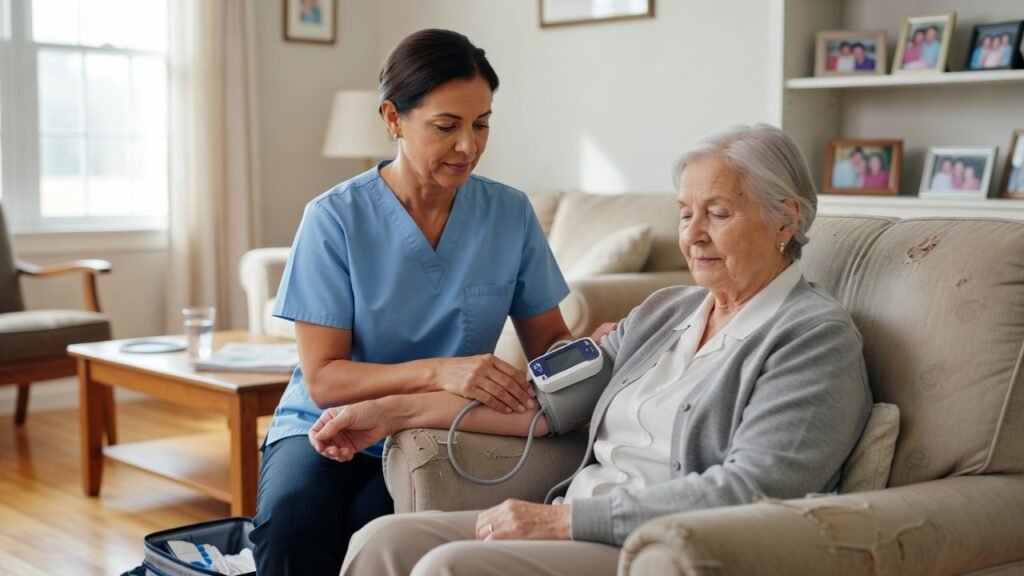
Your parent sat through the intake assessment last Tuesday. The social worker asked about bathing, cooking, getting dressed, walking, and other daily activities. She answered every question. Now you’re waiting and wondering whether that appointment will translate into real help arriving at her apartment in Jamaica, Flushing, or Howard Beach. That uncertainty is common, especially when families are trying to understand Medicaid home care for the first time. This guide explains how Medicaid-funded home care works for Queens residents, what eligibility depends on, what services may be available, and what families should expect during the application and assessment process in 2026.
Important: Medicaid rules and financial limits change. This guide reflects current New York State guidance available in 2026, but individual eligibility depends on the person’s circumstances. Always confirm current requirements with New York State Medicaid, NYC HRA, the person’s Medicaid plan, or a qualified enrollment professional.
Before Anything Else: Does Queens Count as “Long Island” for Medicaid Purposes?
This causes confusion for many families. Queens is one of the five boroughs of New York City, so Medicaid administration for Queens residents generally goes through NYC Human Resources Administration (HRA) rather than Nassau or Suffolk County.
However, families often use the phrase “Long Island home care Medicaid” when searching for Medicaid-funded home care in the broader Long Island area.
If your family member lives in Jamaica, Flushing, Howard Beach, Astoria, Bayside, or another Queens neighborhood, the relevant programs can include Medicaid Personal Care Services (PCS), Consumer Directed Personal Assistance Program (CDPAP), and, when applicable, Managed Long Term Care (MLTC).
The correct program depends on the person’s Medicaid coverage, age, medical condition, functional needs, and assessment results.
Eligibility Checklist: Does Your Family Member Qualify?
Eligibility is not determined by a diagnosis alone. New York looks at Medicaid eligibility, medical stability, functional need, assessment results, and other applicable requirements.
Basic Requirements
A person seeking Medicaid-funded home care generally must:
- Be eligible for New York Medicaid.
- Have a stable medical condition.
- Have a determined need for home care services through the required assessment process.
- Meet the applicable Minimum Needs Requirements when those requirements apply.
- Be able to self-direct care or have an eligible designated representative who can direct care on their behalf.
For CDPAP specifically, NYSDOH confirms these requirements and states that the consumer must be capable of self-directing or have a designated representative.
Medical and Functional Need
A diagnosis by itself does not guarantee home care.
The assessment looks at what the person can and cannot safely do. Depending on the program and circumstances, this can involve activities such as:
- Bathing
- Dressing
- Toileting
- Eating
- Mobility
- Transfers
- Walking
- Personal hygiene
- Other authorized personal care or skilled tasks
One important 2026 change is that New York’s Minimum Needs Requirements now apply to many Medicaid recipients seeking PCS or CDPAP.
For people age 21 and older subject to the new rules, eligibility generally requires an assessment showing at least limited assistance with physical maneuvering with more than two Activities of Daily Living (ADLs).
For individuals with Alzheimer’s disease or dementia, the standard is at least supervision with more than one ADL.
These requirements took effect September 1, 2025.
There are exceptions and legacy protections for certain people who were already authorized for PCS/CDPAP or continuously enrolled in MLTC before the changes took effect.
2026 Medicaid Income and Resource Rules
This is one area where older articles can become misleading very quickly.
The original version of this article used a $1,732 monthly income limit and $16,800 resource limit based on 2024 standards. Those figures should not be presented as current 2026 numbers.
New York updates Medicaid income and resource standards periodically. NYSDOH’s current Medicaid application guidance provides the applicable income and resource information, and the state has issued additional 2026 updates.
For example, the current NYSDOH chart for people who are blind, disabled, or age 65 and older lists a 2025 individual monthly income level of $1,800 and a $32,396 resource level, effective January 1, 2025, with annual adjustments. Families should not assume that number is the correct limit for every 2026 home care situation because Medicaid financial eligibility can depend on the person’s category and coverage pathway.
For that reason, it is better to have the applicant’s current 2026 eligibility category and income/resource rules checked individually rather than relying on one universal number.
What About Assets?
Depending on the Medicaid category, certain assets may receive different treatment or exemptions.
Potentially relevant assets can include:
- Checking accounts
- Savings
- Investments
- Real property
- Vehicles
- Burial arrangements
A primary residence and vehicle may receive exemptions in certain circumstances. The rules can be complicated, particularly for married couples and people seeking long-term care Medicaid.
If your parent appears to be over the limit, do not assume that Medicaid is automatically impossible. Ask a qualified Medicaid eligibility professional to review the situation before making financial decisions.
What Medicaid Home Care in Queens Can Cover
Depending on the person’s eligibility and authorized plan of care, Medicaid-funded home care can provide assistance with activities such as:
Personal Care
- Bathing
- Dressing
- Grooming
- Toileting
- Mobility
- Eating-related assistance
- Meal preparation
- Certain housekeeping tasks related to maintaining the person’s health and safety
CDPAP
CDPAP allows an eligible Medicaid consumer to choose and direct their own personal assistant.
The personal assistant can provide services that would otherwise fall within authorized personal care, home health aide, or certain skilled nursing services.
Skilled Services
Depending on the person’s medical needs and eligibility pathway, home health services can include services such as nursing or therapy.
These services are different from routine personal care and generally require their own medical authorization.
What Is Not Automatically Covered
Medicaid home care does not simply provide unlimited assistance with anything a person wants help with.
Coverage and hours depend on medical necessity, the applicable program rules, assessment results, and the authorized plan of care.
Families should not assume that Medicaid will automatically provide:
- 24-hour continuous care
- Companionship-only services
- Unlimited private-duty nursing
- Unrestricted household help
- Home renovations or modifications
Other programs may provide assistance with certain needs that Medicaid home care does not cover.
The 2026 Application and Assessment Process
The process is not always a straight line. There may be several applications, assessments, notices, and authorization steps.
Stage 1: Apply for Medicaid
If your parent does not already have Medicaid, Medicaid eligibility generally comes first.
Queens residents can begin through NYC HRA or another appropriate Medicaid application pathway.
The exact application route depends on the person’s circumstances, including age, disability status, and existing coverage.
Stage 2: Complete the Required Home Care Assessment
This is where the original article needs an important update.
The state has expanded the role of the New York Independent Assessor Program (NYIAP) in determining eligibility for PCS/CDPAP and certain MLTC enrollment pathways.
For adults, NYIAP’s assessment process can include a Community Health Assessment and clinical assessment. NYSDOH states that the initial NYIAP assessment is the first step in determining eligibility for PCS/CDPAP or MLTC enrollment in applicable cases.
For children under 18, the assessment pathway is different. NYSDOH states that pediatric cases continue to use the applicable physician’s order and assessment process through the local social services district or managed care plan.
Stage 3: Determine Whether the Minimum Needs Requirements Apply
For new applicants subject to the rules that began September 1, 2025, the assessment must establish the required level of functional assistance.
The key standards are:
Most adults subject to the rule:
At least limited assistance with physical maneuvering with more than two ADLs.
Individuals with Alzheimer’s disease or dementia:
At least supervision with more than one ADL.
Stage 4: Care Planning and Authorization
If the person meets the applicable requirements, the authorizing entity develops a person-centered service plan and plan of care.
The assessment does not automatically guarantee a particular number of weekly hours.
Authorized services depend on the person’s assessed needs and applicable Medicaid rules. NYSDOH specifically notes that the NYIAP assessment is only the first step and does not itself constitute complete service authorization.
Stage 5: Choose the Appropriate Service Arrangement
If traditional personal care is authorized, the person may receive services through an appropriate home care provider or Medicaid plan.
If CDPAP is authorized, the consumer or designated representative chooses and directs eligible personal assistants.
Stage 6: CDPAP Payroll and Administration
There has also been a major CDPAP administrative change.
Public Partnerships LLC (PPL) is now New York’s statewide Fiscal Intermediary for CDPAP. All CDPAP recipients are required to work with PPL as their Fiscal Intermediary.
PPL handles administrative functions such as payroll, wage processing, tax withholding, benefits, and employment records.
The consumer or designated representative remains responsible for recruiting, hiring, training, supervising, and terminating personal assistants and arranging backup coverage.
Who Can Be a Paid CDPAP Caregiver?
This is one of the biggest reasons families consider CDPAP.
An eligible consumer can generally choose someone they trust, including certain relatives or friends.
However, there are restrictions.
Under current NYSDOH guidance, a consumer’s:
- Spouse
- Designated representative
- Parent of a CDPAP consumer under age 21
cannot serve as that consumer’s personal assistant.
Other relatives may be eligible depending on the circumstances.
Because the rules can be relationship-specific, families should confirm eligibility before assuming that a particular family member can be paid.
What the Consumer Is Responsible For
CDPAP provides greater control, but it also creates responsibilities.
The consumer or designated representative is responsible for:
- Recruiting personal assistants
- Hiring them
- Training them
- Supervising them
- Terminating them when necessary
- Arranging backup coverage
- Coordinating services
- Maintaining required payroll records
- Working with PPL
This is an important distinction from traditional agency-based home care, where the agency takes responsibility for many employment functions.
Common Reasons an Application or Authorization Can Go Wrong
Reason 1: The Person Does Not Meet the Applicable Functional Requirement
A diagnosis alone may not establish eligibility.
What to do: Review the assessment results and make sure the documentation accurately describes the person’s actual limitations.
Reason 2: The Applicant Does Not Meet the New Minimum Needs Requirements
For new applicants subject to the 2025 rules, needing help with only one ADL may not meet the adult threshold.
What to do: Ask the Medicaid plan or assessment entity to explain the assessment outcome and applicable eligibility standard.
Reason 3: Documentation Is Missing
Medical records, proof of Medicaid eligibility, identity documents, or other requested information can delay a case.
What to do: Respond promptly to requests and keep copies of everything submitted.
Reason 4: Authorized Hours Do Not Match the Family’s Expectations
Families sometimes assume that completing an assessment guarantees a specific number of hours.
It does not.
Hours are based on assessed needs and the authorized plan of care.
What to do: Request an explanation of the assessment and plan of care if the authorized services do not appear to reflect the person’s documented needs.
Reason 5: The Family Is Confused by the CDPAP Transition
CDPAP did not disappear.
New York transitioned to a statewide Fiscal Intermediary, PPL. NYSDOH states that current CDPAP consumers retain their eligibility and services during the transition, subject to applicable program rules.
Queens Families Should Know About Appeals
If Medicaid or a managed care plan takes an action affecting services, the notice should explain the applicable appeal rights.
Depending on the type of decision, a person may have rights to request a plan appeal, fair hearing, or other review.
Do not rely on a general “60-day” or “10-day” rule without reading the actual notice. Appeal deadlines can differ depending on the type of action and whether the person wants services to continue while an appeal is pending.
If your parent’s home care hours are reduced or services are denied, review the notice immediately and seek assistance from a qualified Medicaid advocate or legal services organization if necessary.
Frequently Asked Questions
Can my adult child become my paid CDPAP caregiver?
Potentially, yes.
An adult child may be eligible to serve as a personal assistant when the relationship meets program requirements. However, not every relative is automatically eligible, and the consumer’s spouse and certain other individuals are excluded under current rules.
Does having Medicaid automatically qualify someone for home care?
No.
Medicaid eligibility is only one part of the process. The person must also meet the applicable medical, functional, assessment, and program requirements.
Does having Alzheimer’s or dementia automatically qualify someone?
No.
The diagnosis is important because New York has a specific Minimum Needs standard for individuals with Alzheimer’s disease or dementia. But the person still must be assessed as needing at least supervision with more than one ADL under the applicable rule.
Can someone under 21 receive CDPAP?
Yes, children and younger people can receive Medicaid-funded home care when they meet the applicable requirements. The assessment process and eligibility rules can differ from those for adults.
Can someone who already received CDPAP before September 2025 be affected by the new Minimum Needs Requirements?
Certain people have Legacy Status.
NYSDOH states that individuals who were authorized for or receiving PCS/CDPAS before September 1, 2025, or who were continuously enrolled in MLTC under the applicable rules, can continue under the previous eligibility criteria rather than being subject to the new Minimum Needs Requirements in the same way as new applicants.
What if my parent has Medicare and Medicaid?
Having both Medicare and Medicaid is possible, but the person’s coverage arrangement can affect how services are coordinated.
Do not assume that Medicare automatically pays for long-term personal care at home. Medicaid is generally the program to examine for ongoing long-term personal care and CDPAP eligibility.
Start Here: Check Your Queens Home Care Options
If your parent needs help at home, start with the questions that actually determine the next step:
Does the person have Medicaid?
What daily activities can they no longer perform independently?
How much assistance do they need?
Do the applicable Minimum Needs Requirements apply?
Has the person completed the required assessment?
Can the person direct their own care, or will a designated representative be needed?
Those questions provide a much better starting point than simply searching for a list of “qualifying diagnoses.”
If you are a Queens resident considering Medicaid home care or CDPAP, contact the appropriate Medicaid or HRA resource, your managed care plan when applicable, or a qualified enrollment professional to verify the current requirements for your situation.
2026 Update
New York’s Medicaid rules continue to change. NYSDOH’s official 2026 Medicaid publications include updated Medicaid levels, federal poverty levels, CDPAP policies, and other program changes. The Department’s CDPAP page was revised in May 2026.
For that reason, do not publish the old 2024 income table or the old “one ADL” eligibility language from the original article. Those are the two biggest accuracy problems in the attached version.
QC status: Updated for 2026. The revised version removes the outdated 2024 income figures, adds the September 1, 2025 Minimum Needs Requirements, updates the NYIAP assessment pathway, updates PPL’s role, and distinguishes diagnosis from actual functional eligibility.